
 Fertility Necklace
 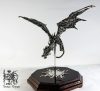 Bahamut Dragon
  Hiro Yuki in Sakura Garde...
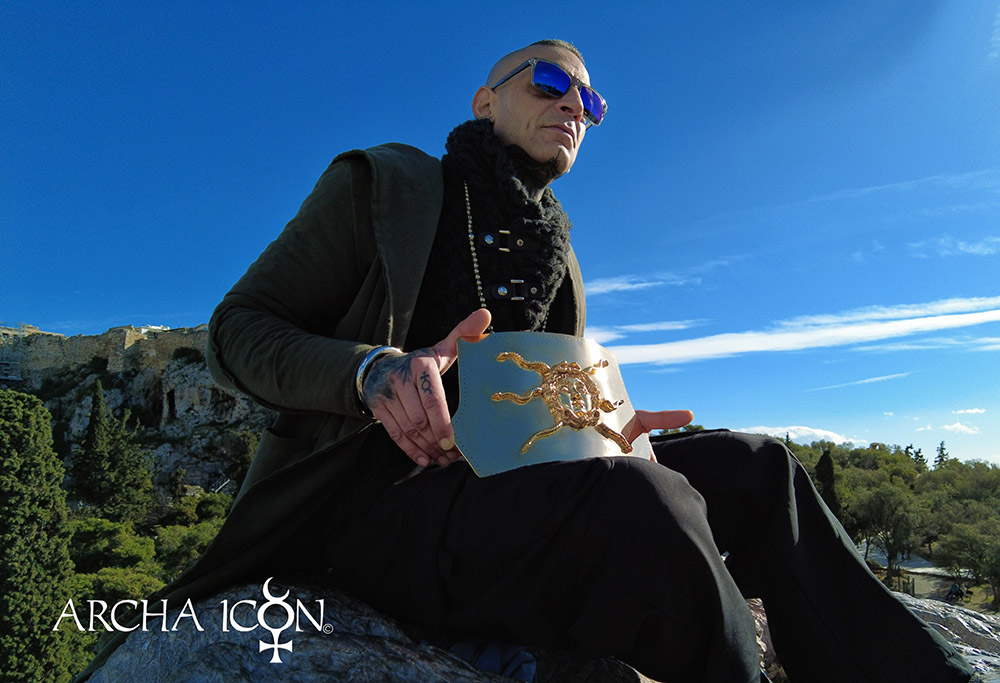
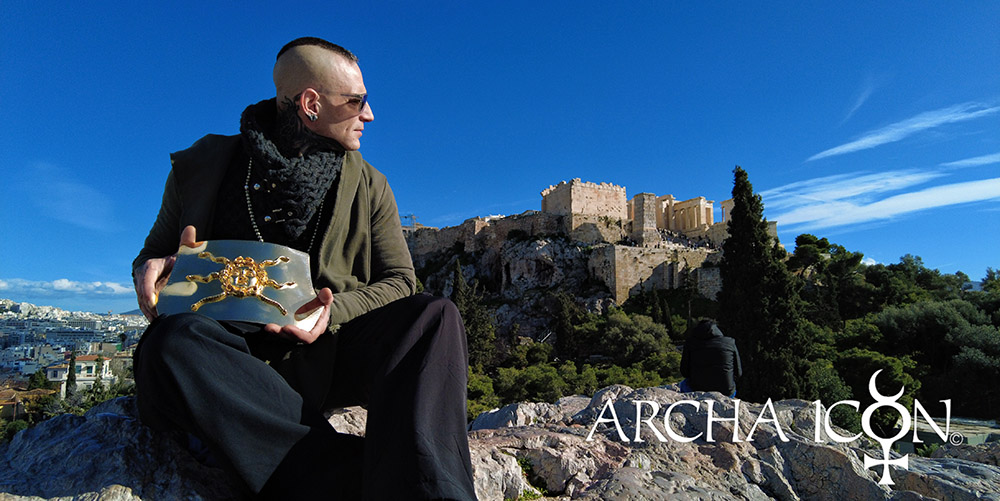
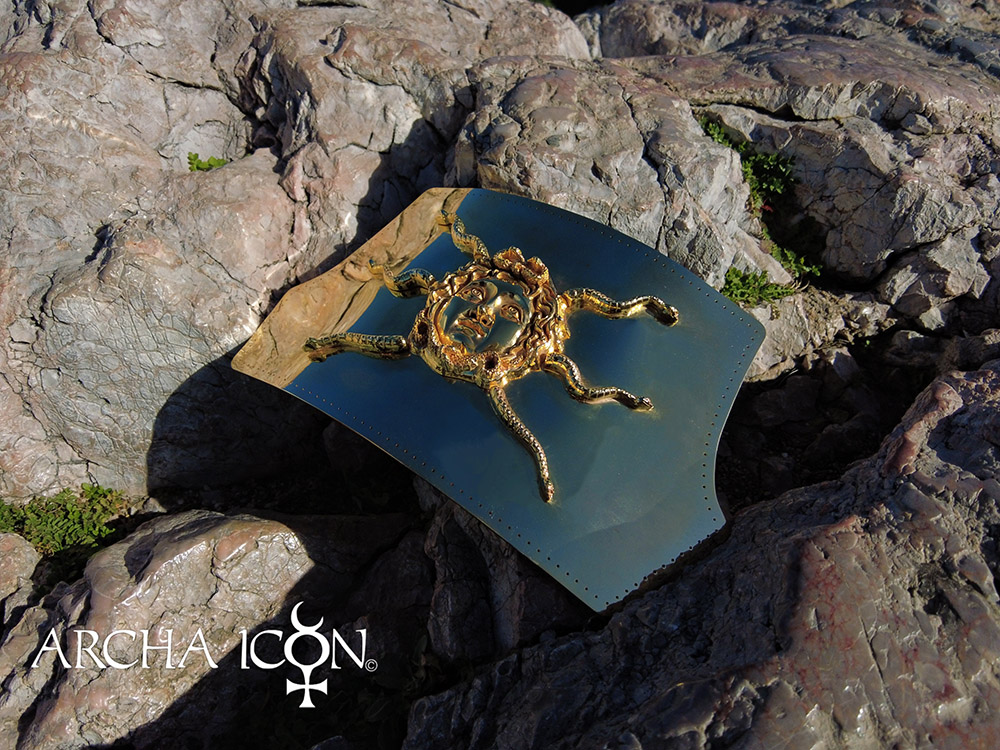
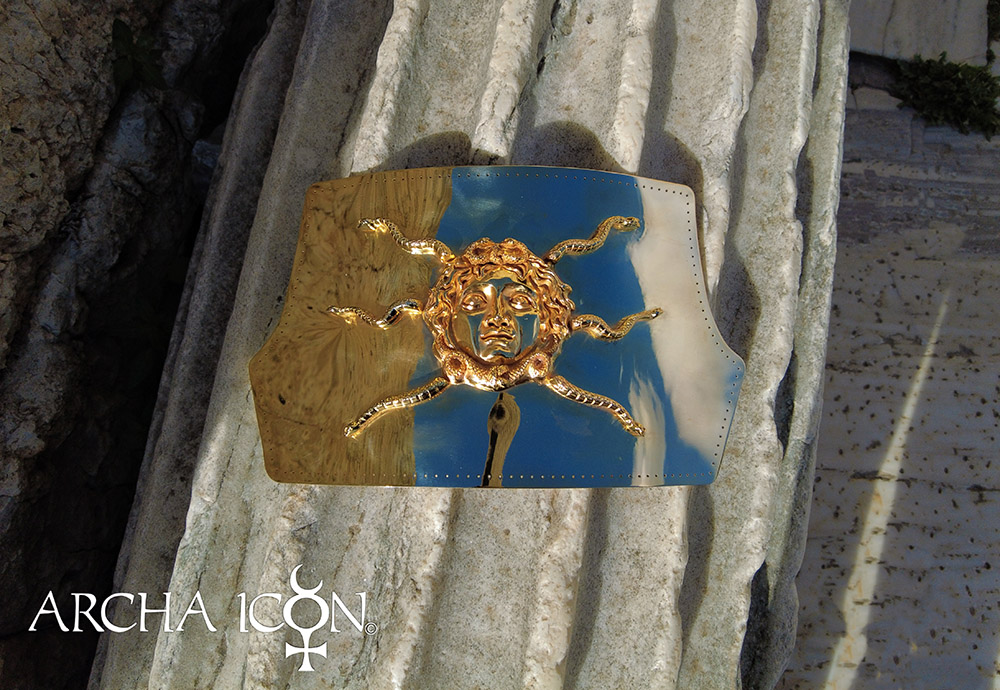
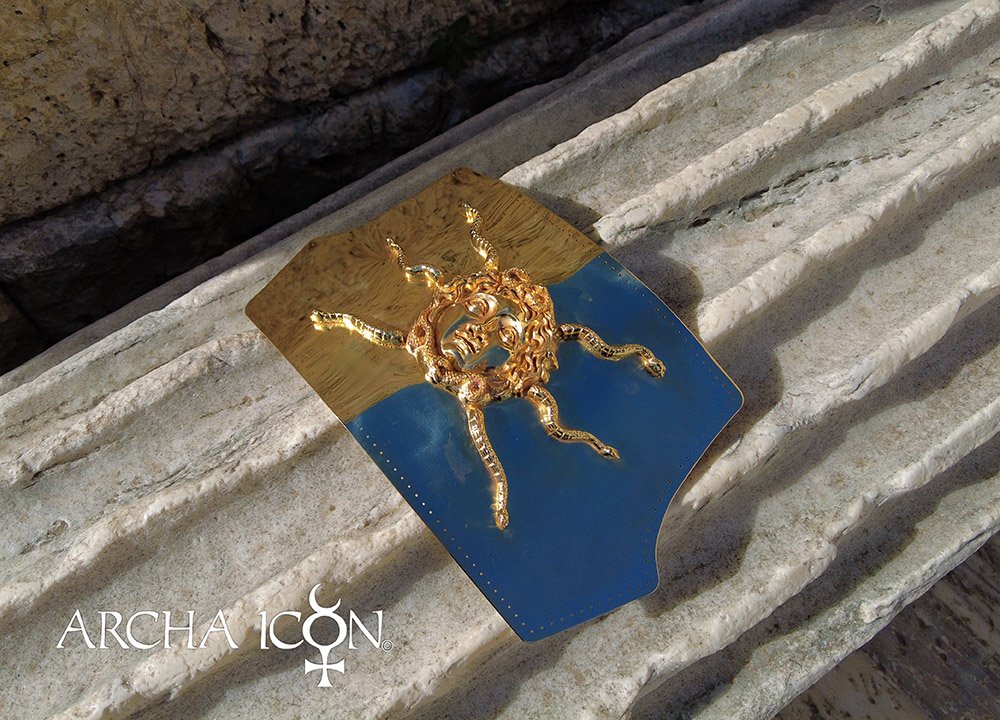
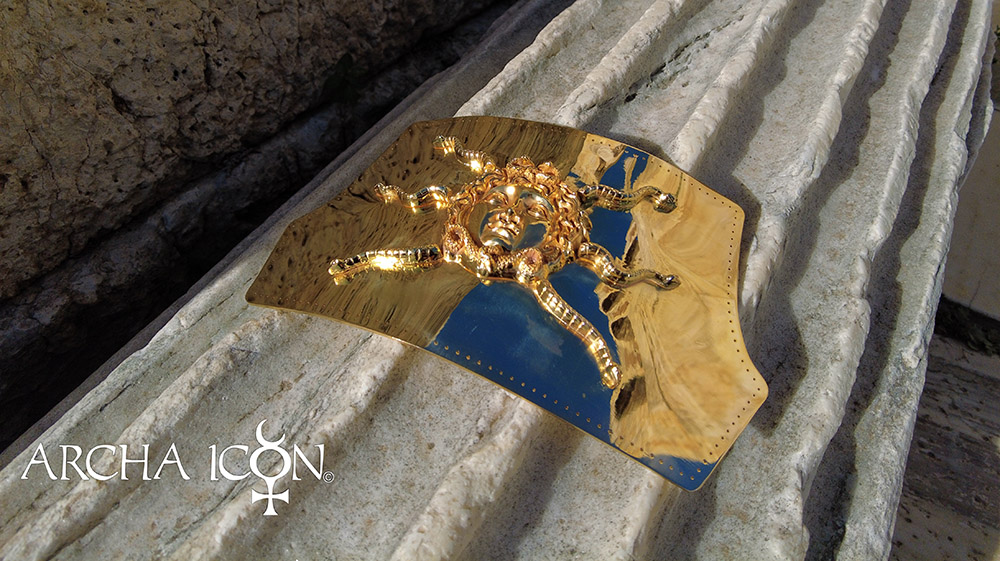
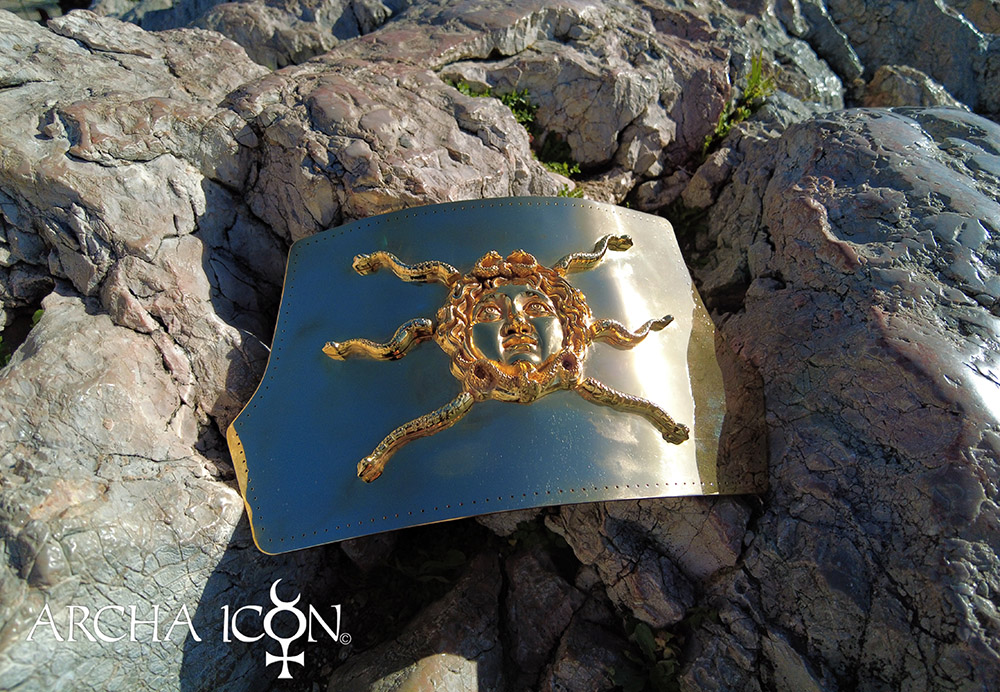
 ALEXANDER THE GREAT – GORGON’S THORAX
This work constitutes a material realization of form derived from depiction, transforming a two-dimensional ancient image into a three-dimensional, functional thoracic object for the first time.
The point of departure for the work is the celebrated Alexander Mosaic from the House of the Faun in Pompeii (2nd century BCE), depicting the confrontation between Alexander the Great and Darius III. Within this mosaic, the thoracic armor of Alexander appears only as pictorial indication—a surface-bound representation without physical volume, structure, or survivable material counterpart.
Through authorial interpretation, ArchaIcon has translated this depiction into material reality. What existed solely as image has been re-conceived, resolved, and brought into physical form. This transformation does not claim archaeological reconstruction; it asserts creative authorship grounded in historical visual evidence, where imagination functions not as invention detached from truth, but as the mechanism by which latent form becomes real.
The central Gorgoneion is realized in bronze through the lost-wax casting technique, establishing sculptural volume where none previously existed. The thoracic field is formed from a flat bronze plate, cut, fire-worked, and hammer-shaped entirely by hand, using traditional metalworking methods. Casting and forging are deliberately unified, mirroring the conceptual act itself: image converted into matter.
This thorax is executed as a master prototype, conceived exclusively for research, study, and conceptual integration, and is not intended for reproduction. It forms part of a broader interdisciplinary collaboration toward the realization of Alexander’s full armor, developed in conjunction with EPOS Leather and Natalia Orfanidis, internationally recognized leather specialist, whose work anchors the project in historically informed material practice.
The commission for this piece originates from an archaeologist affiliated with a university institution, actively involved in archaeological excavations. As such, the work occupies a precise position between academic inquiry and material authorship, without violating the boundaries of either.
The Gorgoneion does not function as ornament. It is reconstituted as an apotropaic and declarative presence—protective, dominant, and corporeal—asserting the thorax as a locus of identity, authority, and continuity. Its curvature is intentional and calibrated to human scale, completing the passage from pictorial surface to lived form.
Documented and presented at the Acropolis of Athens and the Odeon of Herodes Atticus, the work is situationally anchored within the physical and cultural landscape from which its symbolic language originates. These locations serve not as scenery, but as contextual witnesses to the transition from ancient depiction to contemporary reality.
Material: Bronze
Technique: Lost-wax cast sculptural element combined with hand-cut, fire-formed, and hammer-shaped bronze thoracic plate
Weight: 1.086 kg
Status: Master Prototype – Not for Reproduction
This thorax represents a never-before-created object, in which fantasy operates as a disciplined force of realization, converting historical image into tangible presence and extending the life of ancient form into the present through material truth.
Collaborators: Epos Leather (eposleather.com), Michael Kontraros Collectibles (mkontraros.com) Yawxa ,Video and photo editing, capturing.
ArchaIcon Singularity 2026